Blog

10 Palletizing Machine Buying Tips for Global Buyers?

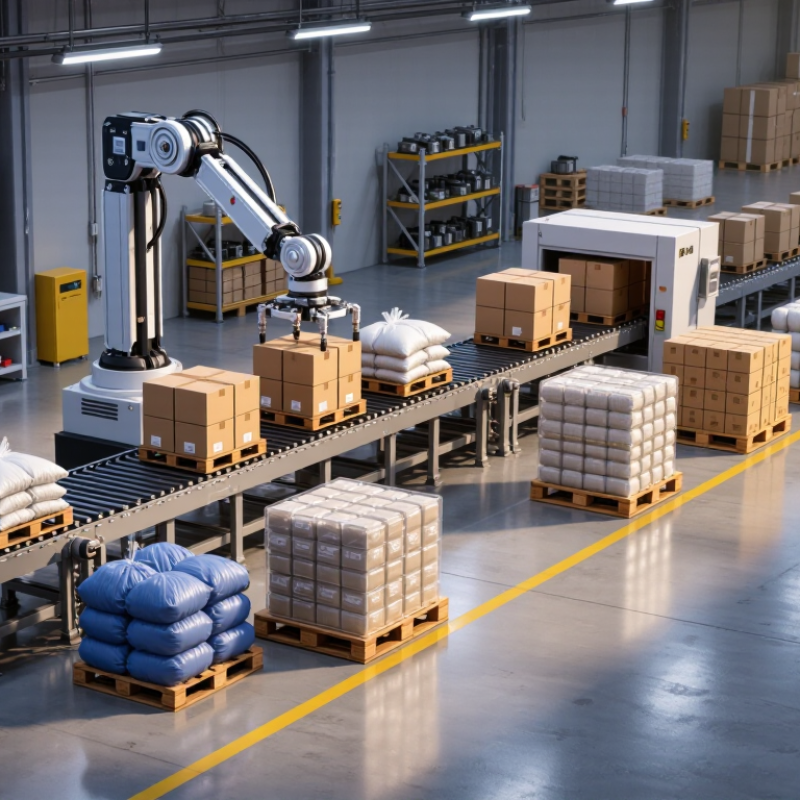
Buying a Palletizing Machine is not simply a matter of comparing prices. Global buyers must match equipment with products, pallets, factory space, and long-term production goals. A machine stacking sealed cartons may perform differently with bags, cases, or fragile containers. The details matter.

A practical evaluation starts with real production data. Check package dimensions, weight variation, pallet height, cycle speed, and required stacking patterns. Ask suppliers to run samples using your actual products. Watch the gripper move, not just the demonstration video. Measure changeover time. A few seconds can become several lost hours each week.

Reliability also depends on integration. Confirm communication with conveyors, wrapping systems, scanners, and warehouse software. Review guarding, emergency stops, operator access, and maintenance procedures with qualified specialists. Ask about spare parts, remote support, training, and service response times in your region. These factors often matter more than a small discount.

Supplier experience deserves careful attention. Request installation references from factories with similar workloads and climate conditions. Review documented performance, not only attractive claims. A strong supplier explains limitations clearly. That builds trust.

A spreadsheet can still lie. Electricity quality, dusty floors, uneven pallets, or changing product sizes may expose hidden weaknesses. Leave room for future growth, but avoid paying for unused capacity. A smaller robotic cell may suit one plant, while a high-speed conventional system may suit another. The right decision combines technical evidence, operator feedback, total ownership cost, and realistic expectations. These ten buying tips help global buyers ask better questions before signing a purchase agreement.
10 Palletizing Machine Buying Tips for Global Buyers?

Define Your Palletizing Needs and Production Requirements

Before comparing palletizing machines, define the work they must perform every shift. Record product dimensions, case weight, packaging material, and surface friction. A small carton may slide differently from a heavy corrugated box. Measure pallet length, width, maximum height, and allowable overhang. Include damaged cartons and mixed product sizes in your assessment.

Capacity must match real production, not an ideal brochure figure. Count cases per minute during normal operation and peak periods. Note shift length, planned growth, and required changeovers. A machine handling 20 cases per minute may struggle when operators frequently switch between four patterns. Keep it practical. Floor space, ceiling height, conveyor direction, and pallet access also affect the design. Many early estimates miss these details.

Ask suppliers to test representative products and complete pallet patterns. Bring actual cartons, including weak or slightly warped samples. Check layer alignment, load stability, changeover time, noise, cleaning access, and operator controls. Safety guarding and emergency stops should fit the site’s risk assessment and applicable requirements. Maintenance access matters too; a compact machine can become difficult to service. Utility needs deserve attention, including electrical supply, compressed air, and network connections. Some decisions still involve uncertainty. Recheck assumptions after a trial run, because laboratory performance rarely matches a busy production floor.
Evaluate Machine Types, Payloads, and Packaging Compatibility

10 Palletizing Machine Buying Tips for Global Buyers

Evaluate Machine Types, Payloads, and Packaging Compatibility

Tip 1. Match the machine type to your production pattern. Robotic arms suit varied products, while conventional palletizers often support steady, high-speed lines.

Tip 2. Measure the full payload, including the product, carton, wrapping, and gripping tool. A narrow safety margin can cause costly downtime.

Tip 3. Check reach, stacking height, and pallet dimensions together. A machine may lift the load but fail at the final layer.

Tip 4. Test packaging compatibility with real cartons, bags, trays, or pails. Surface texture matters.

Tip 5. Inspect the gripper’s contact points. Soft bags may deform, while rigid boxes can slip without proper support.

Tip 6. Ask for a practical line trial. Samples reveal problems that brochures often hide.

Tip 7. Review changeover time between package sizes. Five minutes can matter during daily production.

Tip 8. Confirm conveyor speed and product spacing before selecting machine capacity.

Tip 9. Consider local power standards, floor space, climate, and maintenance skills. Imported equipment may need different electrical protection or training.

Tip 10. Request documented payload tests, guarding details, spare-part plans, and operator instructions. Clear records improve reliability.

I once focused too heavily on maximum speed. That was a mistake. Real performance depends on stable feeding, careful programming, and consistent packaging. Leave room for future products, but avoid paying for capacity your line will never use.

Compare Automation Features, Layouts, and Integration Options

10 Palletizing Machine Buying Tips for Global Buyers

Compare Automation Features, Layouts, and Integration Options

A palletizing machine should fit your entire line, not just stack cartons quickly. Measure product dimensions, pallet sizes, case weights, and required output before requesting quotations. Check layer-forming accuracy, gripper flexibility, changeover time, and recovery after a stoppage. A fast robot is not useful if operators need twenty minutes to reset it. Small details matter.

Review the layout in three dimensions. Confirm aisle clearance, pallet entry direction, guarding space, maintenance access, and ceiling height. Leave room for future conveyors or inspection equipment.

A compact design may appear efficient, but crowded access can increase service time. It happens often. Compare robotic and conventional automation according to product variety, speed, and available floor space.

Integration deserves equal attention. Ask whether the machine can communicate with existing controls through suitable industrial protocols. Verify signals for line speed, pallet status, faults, recipe selection, and emergency stops. Request realistic factory acceptance testing with your products and pallet patterns.

Also examine safety documentation, operator training, spare-parts planning, and local technical support. Remote diagnostics can reduce delays, but they should not replace clear manuals or trained technicians. Utility requirements are easy to overlook, especially compressed-air quality and electrical standards across regions.

A perfect layout rarely exists; your team should record the compromises and judge their long-term cost. End users may prefer a lower initial price, yet difficult changeovers and weak integration can quietly reduce production reliability.

Verify Supplier Quality, Safety Standards, and Global Compliance

10 Palletizing Machine Buying Tips for Global Buyers?

Verify Supplier Quality, Safety Standards, and Global Compliance

A reliable palletizing machine starts with a verifiable supplier, not a polished brochure. Request factory photographs, production records, and references from similar installations. Inspect weld quality, cable routing, guarding, and component traceability. Ask how each machine is tested before shipment. A documented factory acceptance test should include speed, load stability, fault recovery, and repeated pallet patterns. Numbers matter.

Safety evidence deserves careful attention. Require a documented risk assessment, emergency-stop testing, interlocked doors, light curtains, and safe access for maintenance. Confirm that the control system matches relevant machinery safety requirements, such as ISO 12100 and ISO 13849 where applicable. Do not accept “international standard” as a complete answer. Ask which standard, which market, and which certificate.

Global compliance can become expensive when checked too late. Confirm electrical drawings, operating manuals, declarations, and inspection reports in the destination language. Verify requirements for voltage, frequency, labeling, radio equipment, and local machinery certification. Compliance depends on the installation country and machine configuration. A supplier should explain these differences clearly.

I once underestimated spare-parts planning. That mistake can stop production for days. Request a recommended inventory, response times, software backup procedures, and technician training. Review the warranty exclusions line by line. A supplier may be technically capable yet weak in after-sales support. Leave room for doubt, and test every promise before signing.

Calculate Total Ownership Costs, Service Support, and Return on Investment

10 Palletizing Machine Buying Tips for Global Buyers

A palletizing machine’s purchase price is only the visible cost. Your total ownership calculation should include grippers, guarding, conveyors, integration, software, training, energy, spare parts, and planned maintenance. Add changeover time for different carton sizes. A five-minute delay repeated across every shift can erase a promising payback.

The International Federation of Robotics reported 541,302 industrial robots installed worldwide in 2023. This shows strong automation demand, but popularity does not guarantee your return. Measure current cases per minute, labor hours, unplanned stoppages, product damage, and floor-space costs. Then model realistic performance, not the supplier’s best demonstration. A neat ROI spreadsheet can still be wrong. Include a slower ramp-up and occasional faults. Deloitte’s 2024 Smart Manufacturing survey found that 86% of manufacturers viewed smart manufacturing as an important competitiveness driver, yet implementation capability remains uneven.

Buying tip: Request a five-year total-cost worksheet with assumptions shown line by line. Ask for separate figures for installation, commissioning, operator training, annual service, and replacement parts. Require a sensitivity test at 80%, 90%, and 100% utilization.

Service support deserves equal attention. Confirm technician response times, local spare-parts stock, remote diagnostics, software update policies, and escalation procedures. Ask who repairs the machine at 2 a.m. during peak season. A low-cost machine with slow support may become expensive quickly. Test service communication before signing. That detail is often overlooked.

10 Palletizing Machine Buying Tips for Global Buyers? - Calculate Total Ownership Costs, Service Support, and Return on Investment

Practical comparison framework for evaluating palletizing equipment using a five-year total cost of ownership model. Monetary values are illustrative industry benchmarks in USD and should be replaced with supplier quotations and site-specific operating data.

Tip Buying Dimension What to Verify Before Purchase Realistic Benchmark or Target Illustrative Cost or Benefit Service and Risk Check ROI Measurement
1 Match throughput to the production line Confirm bags, cases, cartons, or trays per minute; product dimensions; pallet pattern; stacking height; and planned production growth. 20–60 cases per minute for many conventional robotic or layer-palletizing applications, depending on payload and pattern. Oversizing equipment by 30% may add approximately $20,000–$80,000 to the purchase price without improving current output. Require a documented acceptance test at the agreed production rate using representative products and pallets. Calculate annual recovered capacity: additional units per hour × operating hours × contribution margin.
2 Compare total ownership cost, not only purchase price Request a five-year cost model including equipment, tooling, freight, installation, training, utilities, preventive maintenance, spare parts, and downtime. Five-year operating and service costs commonly represent 25%–60% of the initial equipment investment, depending on complexity and utilization. For a $180,000 system, a reasonable five-year ownership estimate may be $270,000–$390,000. Separate one-time costs from recurring costs and identify which items are excluded from the quotation. TCO per pallet = total five-year ownership cost ÷ pallets produced during five years.
3 Evaluate labor savings realistically Count current palletizing staff, shifts, overtime, injury-related absence, supervision, and the number of employees required after automation. A semi-automatic or robotic solution may reduce direct palletizing labor by approximately 1–3 full-time positions per shift, subject to local workflow. At a fully burdened labor cost of $22 per hour, removing one position from two shifts may save about $91,500 per year before redeployment costs. Confirm whether employees can be reassigned to loading, quality inspection, or material handling rather than eliminated. Annual labor benefit = avoided labor hours × fully burdened hourly rate.
4 Check payload, reach, and pallet-pattern flexibility Verify maximum product weight, end-of-arm tooling capacity, reach, pallet size, layer count, mixed-SKU requirements, and changeover procedure. Allow a minimum 10%–15% payload margin above the heaviest product and confirm every required SKU during factory testing. Additional tooling or pattern hardware may cost $5,000–$25,000 per configuration. Ask for changeover time; a target of 15 minutes or less is useful for frequent product changes. Measure increased line flexibility through reduced changeover minutes and higher available production hours.
5 Use realistic availability and downtime assumptions Review guaranteed availability, mean time between failures, mean time to repair, planned maintenance hours, and jam recovery procedures. For a properly integrated system, target technical availability of approximately 95%–98%, excluding upstream material shortages. A 1% availability loss on a line producing 40 cases per minute for 4,000 hours annually equals about 9,600 cases of lost capacity. Require alarm history, remote diagnostic capability, spare-parts response times, and a defined escalation process. Downtime cost = lost production units × contribution margin per unit + recovery labor and logistics costs.
6 Assess integration and safety requirements Confirm interfaces with conveyors, stretch wrappers, pallet dispensers, warehouse systems, barcode readers, guarding, interlocks, and emergency stops. Budget approximately 10%–25% of machine purchase price for integration, guarding, site preparation, and commissioning. For a $180,000 machine, integration may add approximately $18,000–$45,000. Obtain risk assessment documentation and verify compliance with applicable local machinery, electrical, and workplace safety requirements. Include avoided manual-handling incidents, lower rework, and reduced line interruptions in the benefit model.
7 Compare energy and consumable usage Request connected load, average operating load, compressed-air consumption, lubricant requirements, stretch-film usage, and standby consumption. Many electrically driven systems operate within approximately 3–15 kW average demand, excluding auxiliary equipment. At $0.12 per kWh and 4,000 operating hours per year, a 10 kW average load costs about $4,800 annually. Check whether air quality, pressure, filtration, and electrical supply requirements are compatible with the site. Annual utility cost = average kW × operating hours × local electricity rate, plus compressed-air cost where applicable.
8 Verify local service and spare-parts support Ask where technicians are located, typical response time, critical spare-parts stock, remote support hours, and training availability. For production-critical equipment, target remote response within 4–8 hours and on-site support within 24–72 hours, depending on region. An annual preventive-maintenance contract may cost approximately $6,000–$18,000, excluding major repairs and travel. Define service-level agreements, parts-obsolescence notification, travel charges, labor rates, and warranty exclusions in writing. Compare the expected annual service cost with the financial impact of one additional day of unplanned downtime.
9 Calculate installation, training, and ramp-up time Confirm delivery terms, import duties, foundation work, factory acceptance testing, site acceptance testing, operator training, and production ramp-up. Typical installation and commissioning may require 3–10 working days, depending on line complexity and site readiness. Lost production during a five-day shutdown at a contribution margin of $2,000 per hour could exceed $80,000. Use a detailed project schedule with responsibilities for utilities, drawings, permits, product samples, operators, and maintenance personnel. Ramp-up loss = planned downtime hours × normal contribution margin per hour.
10 Set a measurable payback and ROI threshold Model labor savings, increased throughput, quality improvement, reduced damage, lower injuries, maintenance, energy, financing, and residual value. Many buyers target a simple payback period of approximately 2–4 years, subject to capital policy and production stability. Example: $115,000 annual operating benefit minus $25,000 annual ownership cost equals $90,000 net annual benefit. Use conservative, expected, and optimistic scenarios; do not base approval solely on the supplier’s best-case output claim. Simple ROI = (annual net benefit ÷ total initial investment) × 100%; payback = initial investment ÷ annual net benefit.
Illustrative ROI example: If the initial installed investment is $230,000 and the annual net benefit is $90,000, the simple payback is approximately 2.6 years and the first-year simple ROI is approximately 39.1%. Actual results depend on labor rates, utilization, product mix, downtime, financing, taxes, exchange rates, and local service costs.

Article Source: