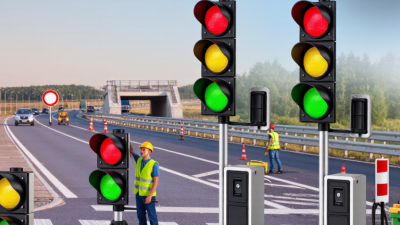
Buying Portable Traffic Lights is not simply a matter of choosing the brightest signal or the lowest price. Road width, traffic volume, work duration, battery access, and weather conditions all affect the right decision. A unit that performs well on a quiet rural road may struggle beside a busy urban junction. Small details matter, including lens visibility, trailer stability, controller access, and charging time.
Traffic engineer Dr. Gene Hawkins puts it clearly: “A signal is only effective when road users can clearly understand it.” That principle guides this practical buying guide. The ten tips examine more than product specifications. They consider setup time, wireless coordination, timing accuracy, maintenance needs, and operator training. Look closely.
Experienced contractors still make mistakes. Some focus on purchase price and overlook transport weight. Others choose advanced controls without checking local crew skills. I have seen equipment appear suitable in a brochure, then become awkward beside uneven pavement and standing water. That gap deserves attention. Reliable Portable Traffic Lights should support predictable movement, visible instructions, and safer work zones without unnecessary complexity. The best choice may not be the most powerful model. It may be the one your team can deploy correctly at dawn, inspect quickly in rain, and repair without delay. These tips will help buyers compare real-world performance with marketing claims, while leaving room for honest reassessment.
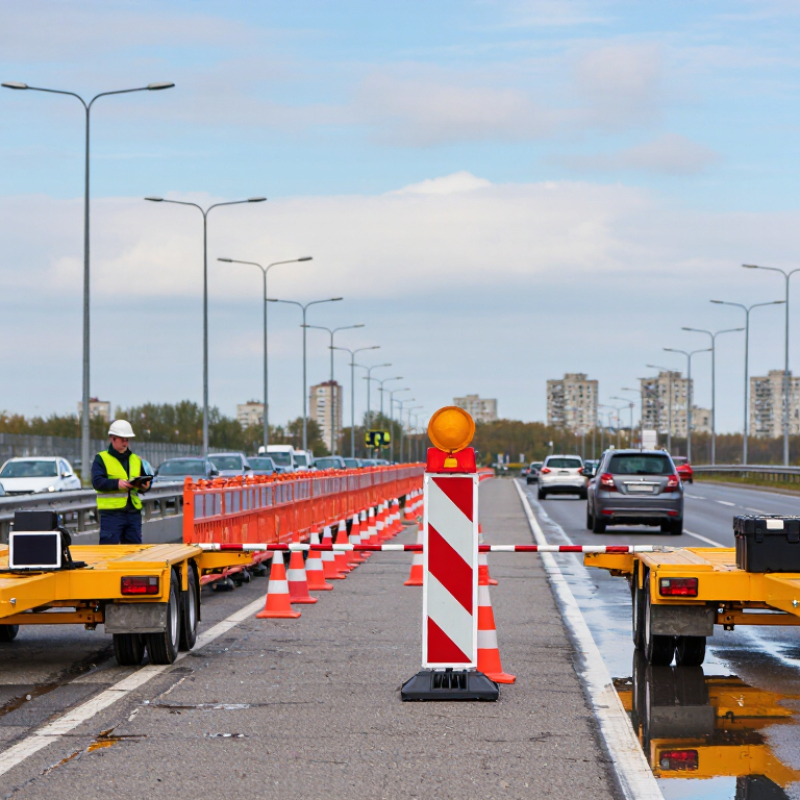
10 Tips for Buying Portable Traffic Lights
Define Requirements Under MUTCD 11th Edition and 12-Inch Signal Standards
Buying portable traffic lights starts with the work zone, not the product photo. The FHWA’s Manual on Uniform Traffic Control Devices, 11th Edition, identifies 12-inch signal indications as the normal standard for many signal applications. Confirm the required lens diameter, signal face arrangement, mounting height, and visibility distance before requesting quotations. A smaller unit may look convenient, but it can reduce recognition on wide roads or during night operations. Measure lane width and approach distance on site.
Check whether the system supports red, yellow, and green indications with clear separation. Ask for documented photometric performance, weather resistance, battery runtime, charging time, and emergency manual control. FHWA’s Traffic Signal Timing Manual recommends timing plans that match traffic demand and clearance needs. Portable equipment should therefore support adjustable cycle lengths, minimum green times, yellow intervals, and all-red clearance. Fixed presets can become a problem when traffic changes unexpectedly.
Safety hardware matters as much as electronics. Review stability, ballast, wind resistance, cable protection, and crashworthiness documentation for temporary traffic control use. NHTSA reported 40,901 roadway fatalities in 2023, reinforcing the cost of poor visibility and confusing control. That figure does not measure portable signals directly, but it deserves attention. Test the units in rain, glare, dust, and low battery conditions. A checklist helps, although it can still miss a practical issue: operators may not understand the controller quickly enough. Request training materials, inspection records, and replacement-part availability before purchase.
This chart highlights key numeric checkpoints for portable traffic-light procurement. A 12-inch signal face is the standard reference for many traffic-signal applications, while flashing indications are generally operated at 50–60 flashes per minute with approximately equal periods of illumination and darkness. Portable units should also provide the three standard signal colors: red, yellow, and green. Always confirm the final specification with the applicable road authority and project-specific MUTCD requirements.
Reference: FHWA Manual on Uniform Traffic Control Devices, 11th Edition, signal and temporary traffic-control provisions.
10 Tips for Buying Portable Traffic Lights
LED visibility deserves more than a lumen claim. Check luminous intensity, beam distribution, chromaticity, and contrast against sunlight. The Institute of Transportation Engineers’ Purchase Specification for Portable Traffic Signals evaluates these performance areas, along with durability and environmental resistance. A signal can look bright indoors yet disappear beside wet asphalt. That mistake is common.
Tip 1: Select a 12-inch lens when road speed, sight distance, or heavy equipment creates visual competition. The Federal Highway Administration’s 2023 Manual on Uniform Traffic Control Devices identifies 12-inch indications as the standard size for many signal applications, while smaller lenses require careful justification. Measure visibility from the driver’s approach, not beside the trailer. Test it at noon, dusk, and during rain. No specification replaces a field check.
Tip 2: Compare LED performance with ITE requirements, not marketing language. Confirm minimum and maximum luminous intensity, color coordinates, flash rate, dimming behavior, and failure alerts. NCHRP Report 812 highlights the importance of consistent signal timing and reliable indication recognition in temporary traffic control. Ask for test records, operating temperatures, battery duration, and ingress protection. A longer runtime may reduce charging work, but it can also hide weak nighttime dimming. I would question any product lacking photometric data. Small details matter.
10 Tips for Buying Portable Traffic Lights
When buying portable traffic lights, timing accuracy deserves more attention than lamp brightness. In field setups, I check cycle length, green splits, yellow intervals, and all-red clearance. The FHWA Traffic Signal Timing Manual notes that coordinated retiming can often reduce delay by 10–20 percent. That benefit disappears when two units drift apart. Ask whether controllers share a stable clock, record timing events, and recover automatically after power loss. Small errors become long queues.
Two-way coordination must match real traffic movement. Test the system on both approaches, especially near a narrow work zone with alternating vehicles. The NCHRP Signal Timing Manual recommends coordination based on arrival patterns, queue conditions, and clearance needs. A fixed cycle may look efficient at noon but fail during shift changes. Detection helps, but it is not magic. Dirt, rain, and poor positioning can produce false readings. Request a timed field demonstration, not only a specification sheet.
Fail-safe operating modes require equal scrutiny. Confirm what happens after wireless communication loss, low battery voltage, controller failure, or conflicting commands. The system should enter a documented safe state, such as all-red or controlled flashing operation, according to the site risk assessment and local requirements. Independent conflict monitoring is valuable. So is a visible fault indicator. I would not trust vague wording like “automatic protection.” Require test records, maintenance intervals, and battery endurance data. A practical weakness remains: operators may ignore alarms when several devices beep together. Clear procedures matter as much as hardware.
When buying portable traffic lights, protection ratings deserve more than a quick glance. IP65 means the enclosure is dust-tight and resists water jets from any direction. It does not mean safe underwater. Ask for test evidence, not only a printed label. Inspect the lid gasket, cable glands, hinges, and latch for even compression. Small gaps can admit grit after repeated roadside movement. This detail matters.
Battery runtime should be measured under the real signal cycle, including lamps, controllers, sensors, and communication modules. A claimed twelve-hour runtime may fall sharply in cold weather, heavy traffic, or aging batteries. Request test conditions, recharge time, low-voltage warnings, and expected service life. Then compare those figures with your longest planned shift. Leave a margin. A unit that stops before removal creates an avoidable safety and labor problem. I would also test one sample overnight before ordering many units.
NEMA enclosure ratings add useful context, but they are not identical to IP codes. NEMA 3R generally addresses outdoor rain, while NEMA 4 offers stronger protection against water and dust. The exact rating must match the enclosure design and installation exposure. For dusty construction zones, NEMA 4 or 4X may be worth examining, especially where corrosion is possible. Check the certification scope and materials, not just the number. One overlooked weakness is maintenance access. If technicians must force the cover or disturb the seal, reliability may decline. Field conditions are rarely perfect, and specifications sometimes look better than daily performance.
| No. | Buying Dimension | What to Verify | Practical Reference Data | Recommended Evidence |
|---|---|---|---|---|
| 1 | IP65 Protection | Confirm that the complete enclosure, cable entries, doors, and connectors are rated IP65 or higher. | IP6X means dust-tight. IPX5 means protection against water jets from any direction. IP65 does not indicate protection against immersion. | Request an independent test report or a declaration identifying the tested enclosure configuration. |
| 2 | NEMA Enclosure Rating | Check whether the enclosure rating matches the installation environment and is based on the complete assembled cabinet. | NEMA 3R is intended for outdoor rain, sleet, snow, and external ice formation. NEMA 4 adds protection against hose-directed water. NEMA 4X also adds corrosion resistance. | Ask for the exact NEMA rating, test basis, material specification, and maintenance requirements. |
| 3 | Battery Runtime | Compare the stated runtime with the actual lamp load, control system, battery capacity, temperature, and flashing or sequencing mode. | A basic estimate is runtime in hours ≈ usable battery watt-hours ÷ average system watts. Do not assume rated amp-hours are fully usable. | Require a full-load runtime test at the intended operating temperature, with the battery type and cutoff voltage recorded. |
| 4 | Charging and Battery Health | Evaluate charging time, charger protection, charge indicators, battery replacement access, and storage requirements. | A complete charge may take several hours depending on battery capacity and charger output. Lead-acid batteries generally require more careful storage than lithium-based batteries. | Check charger output, overcharge protection, low-voltage cutoff, replacement procedure, and expected cycle life. |
| 5 | Visibility and LED Performance | Assess signal diameter, viewing angle, brightness control, lens condition, and visibility in direct sunlight and at night. | LED signals should provide uniform illumination without dark spots, excessive glare, or visible flicker. Visibility depends on optics, mounting height, weather, and ambient light. | Perform an on-site or controlled-distance visibility check during daytime and nighttime conditions. |
| 6 | Control and Synchronization | Verify manual control, automatic sequencing, cycle timing, synchronization between units, and recovery after power interruption. | The controller should prevent conflicting indications and retain or safely restart the programmed sequence after an interruption. | Test all operating modes, timing adjustments, communication range, fail-safe behavior, and emergency stop functions. |
| 7 | Weather and Temperature Range | Confirm operating and storage temperature limits, condensation control, wind resistance, and resistance to rain, dust, and ultraviolet exposure. | Battery capacity and charging performance commonly decrease at low temperatures. The stated range should cover the actual project climate. | Review environmental test results and inspect seals, vents, cable glands, fasteners, and weather-resistant coatings. |
| 8 | Stability and Portability | Compare total weight, wheel or handle design, base footprint, leveling features, locking mechanisms, and resistance to tipping. | A wider base and lower center of gravity generally improve stability. Actual wind performance depends on ballast, surface, and signal height. | Request dimensions, transport weight, ballast instructions, maximum recommended wind conditions, and setup time. |
| 9 | Safety and Visibility Features | Look for high-visibility surfaces, reflective elements, protective guards, secure covers, warning indicators, and safe battery access. | Reflective materials improve recognition when illuminated by headlights, but they do not replace an operating light signal. | Verify the unit against the applicable road-work, temporary traffic-control, and electrical-safety requirements for the project location. |
| 10 | Maintenance and Total Cost | Consider inspection intervals, replacement parts, battery availability, software or controller support, warranty terms, and service access. | Total cost includes purchase, charging equipment, batteries, transport, inspections, repairs, and eventual battery replacement. | Obtain a parts list, maintenance schedule, warranty conditions, service response times, and a five-year operating-cost estimate. |
Note: IP and NEMA classifications are different rating systems. Confirm that the stated rating applies to the complete portable traffic-light assembly rather than to an individual component only.
Buying portable traffic lights requires more than checking signal size or battery life.
Start by confirming the trailer’s gross vehicle weight rating, empty weight, payload, and tongue weight. Your towing vehicle must handle the loaded trailer, not its showroom specification. Include batteries, spare parts, cones, and water ballast in the calculation. Check tire ratings, braking equipment, hitch compatibility, and ground clearance. A trailer that feels stable on pavement may sway on a gravel shoulder.
I once underestimated added battery weight. That mistake reduced towing control.
Warranty coverage deserves close reading.
Ask whether the warranty includes the controller, lamps, batteries, chargers, trailer frame, and wiring. Check coverage for rain, dust, corrosion, and temperature changes. Confirm exclusions for rental use, improper storage, impact damage, and normal battery wear. Response time matters when equipment supports an active work zone.
Request written repair procedures, replacement-part availability, and technical support hours. A long warranty can still be weak if shipping costs remain unclear.
FHWA work-zone guidance should shape the purchase and deployment plan.
Review current FHWA resources and the applicable MUTCD requirements, then confirm local agency rules before installation. Evaluate signal visibility, stopping sight distance, queue length, pedestrian movement, and communication between units. Use trained personnel to set timing and inspect each shift.
Flashing lights do not correct poor placement. Consider weather, nighttime glare, emergency access, and backup control methods. Guidance changes, and assumptions made last season may no longer fit today’s project.