Choosing the right Ev Charging Exporter can shape your project’s safety, cost, and long-term performance. A low quotation may look attractive, but hidden testing gaps, weak support, or delayed spare parts can quickly change the calculation. Buyers need more than product photos and polished brochures.
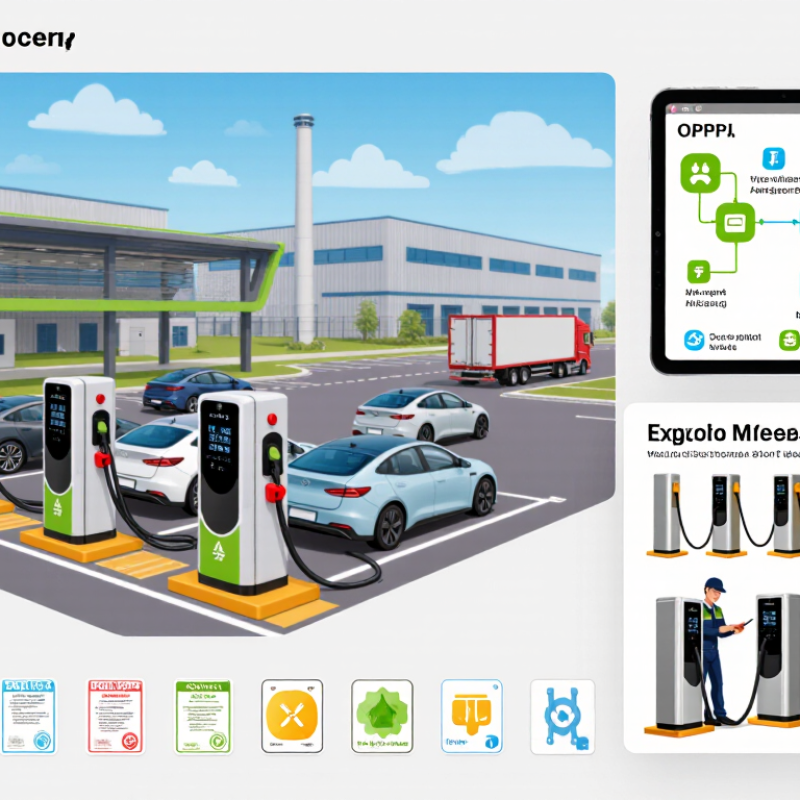
A reliable exporter should explain charger ratings, connector standards, protection features, and software compatibility clearly. Ask for test reports, quality certificates, factory addresses, and traceable component information. Check whether the supplier supports OCPP, load balancing, RFID access, and remote diagnostics. These details matter when a charger operates outdoors beside a busy parking area. Look closely at IP ratings, cable quality, screen visibility, and emergency-stop performance. Request a working sample before placing a large order. Real testing reveals problems that specifications sometimes hide.
Experience also matters. An established supplier should discuss installation conditions, local grid limits, shipping documents, warranty procedures, and technical training. Speak with recent customers when possible. Their comments may reveal response times more honestly than a sales presentation. No exporter is flawless. Even experienced teams can misunderstand regional requirements or underestimate after-sales workloads. That is why a careful evaluation should include written responsibilities, replacement timelines, inspection steps, and clear payment terms. The best choice is rarely the cheapest offer. It is the Ev Charging Exporter that communicates accurately, proves quality consistently, and remains accountable after delivery. A thoughtful buyer should still question every impressive claim. That small doubt can prevent a costly mistake.
How to Choose the Best China EV Charging Exporter?
Quantify Market Fit: China Sold 12.87 Million NEVs in 2024 (CAAM)
China’s 12.87 million new energy vehicle sales in 2024, reported by CAAM, signal substantial charging demand. However, vehicle volume alone cannot prove export success. A suitable exporter should match your target country’s vehicle mix, grid conditions, and charging habits.
Ask for measurable evidence. Review annual production capacity, failure rates, test reports, and delivery records for similar markets. Check whether chargers support local voltage, connectors, communication protocols, and payment systems. A parking garage may need compact AC units, while a highway site requires durable DC equipment, cable cooling, and clear uptime commitments.
Do not trust attractive prices too quickly. An inexpensive unit can create higher installation and maintenance costs later. Request sample testing, spare-parts plans, firmware update procedures, and technical response times. Confirm documentation before signing: safety certificates, warranty terms, inspection records, and export packaging details. The real test is often a small pilot shipment. It may expose weak instructions, delayed support, or unsuitable enclosure design. That is useful evidence, not failure. Market data can still mislead when regional charging behavior differs from national sales figures. Recheck assumptions with local installers and fleet operators.
China’s new energy vehicle sales increased from 1.37 million units in 2020 to 12.87 million units in 2024, demonstrating a rapidly expanding market for EV charging equipment. Exporters should assess compatibility with China’s high-volume, fast-growing charging ecosystem and evolving infrastructure requirements.
Source: China Association of Automobile Manufacturers (CAAM), annual new energy vehicle sales data. Figures are rounded to two decimal places.
China had 3.58 million public EV chargers by the end of 2024. This figure shows scale, but it does not define your project. A busy urban parking garage needs different equipment from a rural highway stop. Map each site before contacting an exporter. Record vehicle flow, parking time, grid capacity, weather, and expected charging sessions.
A city garage may require compact AC chargers, clear displays, and strong cable management. A highway location may need high-power DC units, reliable cooling, and simple payment access.
Public chargers also face dust, rain, heat, and occasional misuse. Ask the exporter for test reports, installation guides, spare-parts plans, and warranty response times. Request samples when possible. Brochures are not enough.
Look beyond the lowest quotation. Check production experience, quality-control procedures, software compatibility, and export documentation. Confirm whether the equipment supports your local electrical standards and communication protocols. A capable exporter should explain limitations clearly, not promise everything. That matters.
Demand estimates can be wrong. A site may appear busy during holidays but remain quiet on weekdays. Charging data should be reviewed after installation, then compared with the original forecast. This uncomfortable step often reveals weak assumptions. Choose an exporter willing to adjust hardware, settings, and support around real operating conditions.
How to Choose the Best China EV Charging Exporter?
Specify Hardware: Match 7–22 kW AC and 30–480 kW DC to Each Site
Power selection should follow parking time, vehicle flow, and grid capacity. A 7–22 kW AC charger suits offices, apartments, hotels, and overnight parking. A 30–180 kW DC unit fits retail stops and fleet depots with predictable turnover. Higher outputs, reaching 480 kW, need stronger transformers, thicker cables, and careful thermal planning. The International Energy Agency reported over four million public charging points worldwide at the end of 2023. Demand is growing, but every site still needs a practical load assessment.
Ask the exporter for measured efficiency, connector options, protection ratings, and operating temperature data. Request test reports, not only catalog claims. A 22 kW AC unit may perform poorly if the building cannot support three-phase power. Likewise, a 480 kW cabinet can look impressive, yet remain underused at a quiet location. Check cable length, noise levels, installation drawings, maintenance access, and remote diagnostics. The best specification is sometimes less powerful. That is easy to overlook.
Tips: Match AC power to dwell time. Match DC power to queue length. Confirm grid limits before ordering. Compare continuous output, not peak output. Review IEC and local certification documents. Also, ask for field references from similar climates. The IEA’s Global EV Outlook 2024 shows rapid charging-network expansion, but utilization varies sharply by region. A spreadsheet cannot reveal every site problem. Pilot testing may expose assumptions that looked correct on paper.
| Charger Category | Rated Power | Typical Electrical Input | Indicative Output Current | Best-Fit Site | Installation and Grid Requirements | Important Hardware Specifications | Exporter Verification Points |
|---|---|---|---|---|---|---|---|
| AC Destination | 7 kW AC | Single-phase, 220–240 V AC; approximately 30–32 A | Up to 32 A AC | Residential parking, apartments, small offices, overnight fleet parking | Dedicated circuit; conductor and protective-device sizing must follow local electrical codes. Suitable where vehicles remain parked for several hours. | Type 2 socket or tethered cable, residual-current protection, overcurrent protection, surge protection, load management, IP54 or higher enclosure target | Confirm single-phase compatibility, cable length, residual-current device requirements, enclosure rating, and communication options such as OCPP and Ethernet or cellular connectivity. |
| AC Destination | 11 kW AC | Three-phase, 380–415 V AC; approximately 16 A per phase | Up to 16 A per phase | Homes with three-phase supply, workplaces, hotels, retail parking, residential developments | Requires balanced three-phase supply and appropriate upstream protection. Charging performance depends on the vehicle’s onboard AC charger. | Type 2 connector, phase monitoring, dynamic load balancing, residual-current protection, surge protection, IP54–IP55 enclosure target | Check phase sequence, neutral requirements, local grid frequency, cable temperature monitoring, firmware support, and compatibility with site energy-management systems. |
| AC Destination | 22 kW AC | Three-phase, 380–415 V AC; approximately 32 A per phase | Up to 32 A per phase | Commercial parking, destination charging, car dealerships, fleet depots with long dwell times | Needs a suitable three-phase connection and higher-capacity distribution equipment than an 11 kW unit. The vehicle must support 22 kW AC to use the full rating. | Type 2 socket or tethered cable, dynamic load management, phase-loss detection, residual-current protection, surge protection, IP55 target for exposed locations | Verify maximum site demand, connector standard, cable rating, thermal derating, outdoor corrosion resistance, backend protocol, and spare-parts availability. |
| DC Fast Charging | 30 kW DC | Three-phase AC input; commonly 380–415 V AC, subject to power-factor and efficiency losses | Approximately 30–150 A DC, depending on the vehicle battery-voltage range | Small public sites, workshops, roadside locations with moderate traffic, light commercial fleets | Requires a dedicated three-phase feeder, utility approval, ventilation and clearance planning, and protection against public-access hazards. | CCS2 or CCS1 according to market, optional CHAdeMO where required, 200–1000 V DC operating range is common for modern platforms, emergency stop, insulation monitoring, IP54 or higher | Confirm regional connector requirements, minimum and maximum voltage, connector liquid cooling needs, payment and communication functions, and output derating at high ambient temperature. |
| DC Fast Charging | 60 kW DC | Three-phase AC input; typically requires approximately 65–70 kVA of upstream capacity | Approximately 60–300 A DC, depending on output voltage | Urban public charging, service stations, retail centers, mixed passenger-car and light-commercial fleets | Confirm transformer capacity, maximum demand charges, cable routing, bollard protection, and space for maintenance access. | CCS connector, optional dual-output power sharing, isolation monitoring, DC leakage detection, surge protection, remote diagnostics, IP54–IP55 enclosure target | Request efficiency data, power-sharing logic, connector temperature monitoring, field-replaceable modules, software update method, and service response capability. |
| High-Power DC | 120 kW DC | Three-phase AC input; commonly requires approximately 130–140 kVA of upstream capacity | Approximately 120–600 A DC, depending on output voltage and cable configuration | High-turnover urban hubs, highway service areas, taxi fleets, delivery fleets, logistics facilities | Often requires medium-capacity transformer planning, robust civil works, cable protection, traffic separation, and coordinated utility interconnection. | CCS high-power output, 200–1000 V DC range commonly specified, modular power conversion, dynamic power allocation, liquid-cooled cable option, emergency stop | Check sustained power at the intended voltage, simultaneous charging performance, cable cooling control, noise levels, grid-compliance test reports, and warranty terms. |
| High-Power DC | 180 kW DC | Three-phase AC input; commonly requires approximately 195–210 kVA of upstream capacity | Approximately 180–900 A DC, depending on output voltage; high-current operation may require liquid cooling | Highway corridors, commercial fleet depots, intercity transport hubs, high-volume public charging plazas | Requires careful transformer, switchgear, foundation, cable-trench, and thermal-management design. Local authorities may require impact protection and traffic controls. | CCS connector, modular rectifier architecture, power sharing between outlets, insulation monitoring, contactor diagnostics, liquid-cooled cable for high-current vehicles | Validate rated power at both 400 V and 800 V vehicle systems, module redundancy, connector duty cycle, cooling-system serviceability, and electromagnetic-compatibility documentation. |
| High-Power DC | 240 kW DC | Three-phase AC input; commonly requires approximately 260–280 kVA of upstream capacity | Approximately 240–1200 A DC, depending on output voltage; practical current is limited by cable and vehicle specifications | Highway fast-charging plazas, heavy-use fleet depots, regional logistics and transport centers | Utility capacity, transformer placement, thermal clearance, drainage, protective barriers, and maintenance access become major design factors. | Wide-voltage DC output, liquid-cooled cable, dynamic power distribution, high-voltage interlock monitoring, surge protection, remote fault reporting | Ask for continuous-output curves, power factor, total harmonic distortion, thermal derating tables, IP and IK test results, and maximum simultaneous-output capability. |
| Ultra-High-Power DC | 360 kW DC | Three-phase AC input; commonly requires approximately 390–420 kVA of upstream capacity | Approximately 360–1800 A DC, depending on output voltage; liquid-cooled conductors and controlled power sharing are normally necessary | Dedicated highway hubs, bus and truck depots, high-throughput commercial charging sites | May require a dedicated medium-voltage connection, large transformer, substantial civil works, and a detailed load-management strategy. | Multiple liquid-cooled CCS outlets, modular power cabinets, vehicle communication monitoring, insulation resistance measurement, emergency isolation, weather-resistant enclosure | Confirm whether the rating is continuous or peak, determine output per connector during simultaneous use, review cooling redundancy, and verify grid-code compliance for the destination market. |
| Ultra-High-Power DC | 480 kW DC | Three-phase AC input; commonly requires approximately 520–560 kVA of upstream capacity before site auxiliary loads | Approximately 480–2400 A DC, depending on output voltage; high-voltage, liquid-cooled systems and managed power allocation are essential | Large highway charging hubs, heavy-duty fleet operations, bus terminals, logistics and future-ready commercial sites | Usually demands dedicated utility planning, high-capacity transformer and switchgear, engineered foundations, physical protection, and carefully managed peak demand. | High-voltage DC output, liquid-cooled charging cables, modular power conversion, multi-dispenser architecture, advanced insulation monitoring, emergency stop, remote monitoring | Require independent test reports, continuous-power evidence, thermal and acoustic data, connector-cooling specifications, cybersecurity controls, local service coverage, and a complete spare-parts plan. |

| Specification note: AC input capacity figures are indicative and include typical conversion losses; the final value must be confirmed from the charger datasheet and local utility requirements. DC output current varies with vehicle battery voltage, charger voltage range, cable rating, temperature, and power-sharing configuration. Connector selection, electrical protection, installation methods, and grid compliance must follow the destination market’s applicable standards and regulations. | |||||||
When choosing a China EV charging exporter, screen compliance before comparing price or appearance. Ask for current test reports, certificates, and product models covered by each document. IEC 61851 should confirm safe conductive charging functions, communication, and control behavior. ISO 15118 matters when advanced vehicle-to-charger communication is required. It may support identification, charging schedules, and managed energy exchange.
OCPP connects the charger with your backend platform, but the exact version and features must be checked. A unit claiming OCPP support may offer only limited functions. Request a live demonstration using your software, not only a written declaration. For the Chinese market, GB/T requirements can cover connectors, electrical interfaces, and communication details. These requirements differ from common international systems. Confirm the target vehicle types before approving samples.
CE and UL evidence also needs careful review. CE relates to applicable European conformity requirements, while UL certification or evaluation depends on the product, market, and installation conditions. Do not accept a logo as proof. Inspect the certificate holder, model number, testing scope, factory address, and expiration status. Paperwork can still mislead. A practical weakness is relying on one laboratory report for every charger variation. Cable length, enclosure design, firmware, and input voltage can change compliance results. Ask for production samples, firmware records, inspection procedures, and post-sale technical support. Test the equipment under realistic conditions, including heat, unstable voltage, emergency stops, and network loss.
Choosing a China EV charging exporter requires more than comparing unit prices. A low quotation can hide installation work, software fees, energy losses, and slow service. Model the total cost of ownership over five, eight, and ten years. Include purchase price, shipping, customs handling, site preparation, maintenance, downtime, spare parts, and eventual replacement. A charger costing 15% less may become more expensive after repeated repairs. Use realistic assumptions, not optimistic promises. Ask for test reports, production experience, and references from similar climates and operating hours.
Warranty terms need careful reading. Check coverage for power modules, cables, screens, cooling fans, and communication boards. Confirm labor, freight, response time, and replacement procedures. Some warranties sound strong but exclude outdoor humidity or unstable voltage. Logistics also affects cash flow. Request packaging dimensions, gross weight, lead time, container loading plans, and insurance responsibilities. Keep critical spares near the installation site. A spare connector or control board can prevent several days of lost charging revenue.
Tips: Build a five-year base case and a ten-year stress case. Add 10–15% for uncertain maintenance. Ask the exporter to price a starter spare kit separately. Test one unit before ordering many. My first TCO comparison underestimated technician travel costs. That mistake changed the final supplier ranking. Check the numbers again.