China Best Assembly Line Trolley Manufacturers
Selecting a reliable Assembly Line Trolley manufacturer in China starts with the work the trolley must perform. A unit carrying small electronic components has different needs from one moving heavy fixtures between stations. Check the load rating, platform dimensions, wheel material, handle height, and turning space. These details affect daily use, not just the product sheet. Small things matter.
A useful supplier should explain its materials, production process, inspection steps, and options for customization. Ask how the stated load capacity is tested, and request drawings or sample photographs that show welds, joints, and wheel fittings. If the trolley will run on uneven floors, discuss wheel diameter and braking requirements before confirming an order. Specifications can sound clear until they meet a real factory floor.
This guide introduces manufacturers and practical points buyers can compare, including product range, manufacturing experience, communication, and after-sales support. It does not assume one company suits every production line. Some supplier information may change, and a polished catalog is not proof of consistent quality. Verify current specifications directly, and compare quotations on the same requirements. That takes time. It can also reveal gaps that are easy to miss when price leads the decision. The right choice is the trolley and supplier that fit the workflow, documented requirements, and maintenance capacity of the facility.
Assembly-Line Trolley Types: Match Cart Design to Material-Flow Needs
China Best Assembly Line Trolley Manufacturers
Assembly-Line Trolley Types: Match Cart Design to Material-Flow Needs
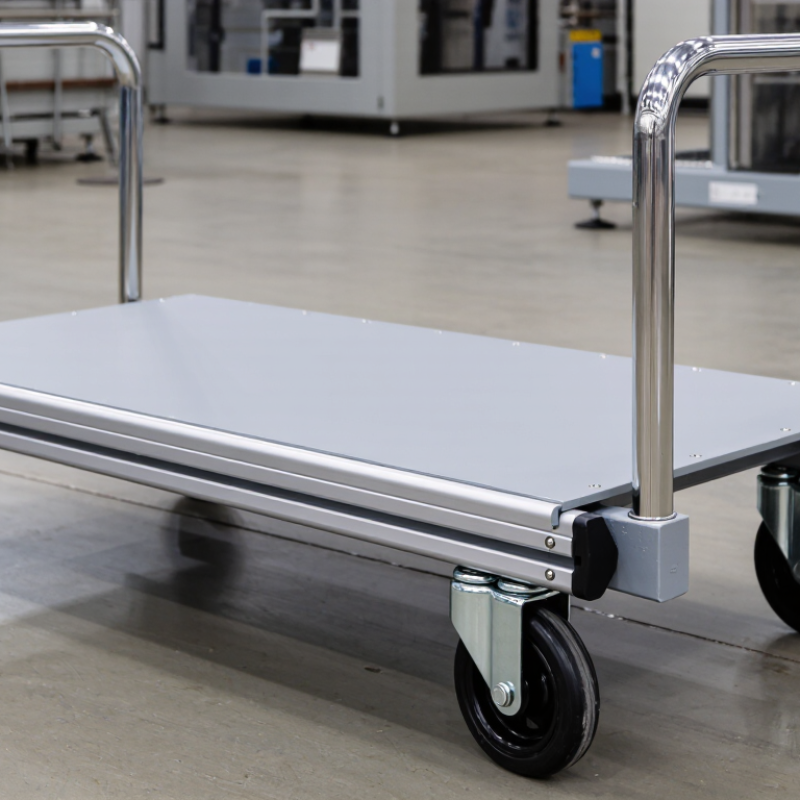
Choosing an assembly-line trolley starts with the load, route, and delivery rhythm. A flat-deck cart suits boxed components and bulky parts, while bin trolleys keep small fasteners visible and separated. For narrow aisles, a compact, two-tier design can reduce floor obstruction. That matters. MHI and Deloitte’s 2024 Annual Industry Report found that 55% of surveyed supply-chain leaders expected disruptions to increase over the next five years. Flexible trolley layouts can help teams adjust material flow when production priorities shift.
For predictable, repeated replenishment, tugger trains move several carts along a fixed route. They can reduce individual trips, but need clear turning space and dependable stopping points. Line-side picking often calls for shelf trolleys with angled bins, so operators can identify parts without reaching across deep trays. Heavy or delicate materials may need dedicated cradles or restrained platforms. The right choice is rarely the cart with the most features.
Before specifying capacity, measure the narrowest aisle, doorway, and workstation turn. Check wheel diameter, handle height, braking, and loaded-cart visibility on the actual floor. A trolley that rolls smoothly in an empty test may behave differently around people and thresholds. Real floors are less tidy than drawings. Pilot the cart with a representative load and route, then record delivery time, congestion, and operator feedback. Some designs will need adjustment. That is useful evidence, not a failed trial.
China Best Assembly Line Trolley Manufacturers - Assembly-Line Trolley Types: Match Cart Design to Material-Flow Needs
Compare common assembly-line trolley designs by their typical application and planning characteristics. Dimensions and load capacities below are indicative ranges; confirm the rated capacity, wheel specification, and operating conditions with the supplier before purchase.
| Trolley Type | Typical Configuration | Indicative Load Capacity | Common Size Range (L × W × H) | Best Suited Material Flow | Key Selection Consideration |
|---|---|---|---|---|---|
| Multi-Shelf Picking Cart | Two to four fixed shelves, push handle, and four swivel casters | 150–500 kg | 700–1,200 × 450–700 × 900–1,500 mm | Moving small parts, tools, and mixed containers between nearby workstations | Check shelf spacing, edge lips, caster brakes, and the load rating for each shelf. |
| Flat-Deck Platform Trolley | Single low platform with a removable or fixed push handle | 300–1,000 kg | 800–1,500 × 500–900 × 250–1,000 mm | Transporting bulky cartons, equipment, or palletized loads over short distances | Match deck size to the load footprint and select wheels for the floor surface and payload. |
| Tugger Train Cart | Low-profile cart with a tow hitch and, where needed, a steering linkage | 300–1,000 kg per cart | 800–1,400 × 500–900 × 250–600 mm | Scheduled, high-volume replenishment using a train of carts pulled by a tugger | Confirm hitch compatibility, turning radius, train length, and safe route width. |
| Kitting Cart | Multi-level shelves, bins, dividers, or a layout tailored to a specific kit | 150–500 kg | 700–1,200 × 450–750 × 1,000–1,600 mm | Delivering pre-sorted components to an assembly station in sequence | Arrange storage positions for clear identification, ergonomic access, and kit completeness. |
| FIFO Flow-Rack Cart | Inclined roller or wheel lanes that feed containers from the loading side to the picking side | 200–600 kg | 900–1,500 × 500–900 × 1,200–1,800 mm | First-in, first-out replenishment of standardized bins or totes at point of use | Verify container dimensions, lane pitch, roller capacity, and replenishment access. |
| Lift-Table Trolley | Mobile platform with a manual or powered scissor-lift mechanism | 150–500 kg | 700–1,200 × 450–800 × 900–1,500 mm | Raising or lowering parts to a practical working height during transfer or assembly | Consider lift range, platform size, stability, pinch-point protection, and operator use. |
| Bin Trolley | Open frame or tiered rack sized for stackable bins and small-part containers | 100–400 kg | 600–1,000 × 400–700 × 900–1,500 mm | Frequent delivery and return of small components in bins or totes | Match frame openings and shelf pitch to the bin dimensions and required access direction. |